


As the popularity of CBD continues to grow, consumers are faced with a variety of product options on the market. Two commonly encountered terms are “full spectrum” and “broad spectrum” CBD. Understanding the differences between these two types can be helpful in making informed decisions about products and which ones are better for your business needs. Here are four essential things you should know about the differences between these two types of CBD.
The Composition of Cannabinoids
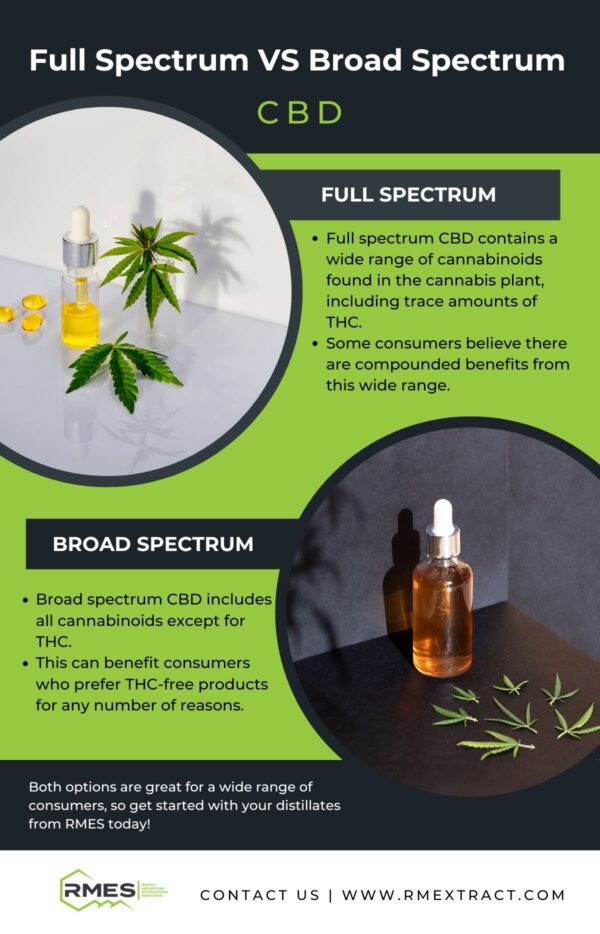
Full spectrum CBD contains a wide range of cannabinoids found in the cannabis plant, including trace amounts of THC (tetrahydrocannabinol), the compound responsible for the “high” associated with marijuana. Broad spectrum CBD, on the other hand, includes all the cannabinoids except for THC.

Benefits From Multiple Compounds
Full spectrum products are often favored by those who believe in the enhanced benefits derived from the combination of all cannabinoids, terpenes, and other compounds. However, broad spectrum CBD also leverages many of these additional plant components while excluding THC, making it a viable option for those who don’t want THC’s potential effects.

Legality and Drug Testing Implications
Full spectrum CBD products can contain up to 0.3% THC, which is legal under federal law. Broad spectrum CBD is THC-free (or contains undetectable levels), which may make it a safer choice for individuals concerned about drug testing for work or legal reasons.

Choosing the Right Product for Your Business
The choice between full spectrum and broad spectrum CBD will depend on personal preferences and needs for consumers, but stocking either or both types of products may be helpful in maintaining a diverse customer base.
Both full spectrum and broad spectrum CBD offer unique advantages. Understanding these differences can help you select the best product for your business. Learn more about the options you have for your business and get started with all kinds of CBD products by contacting us today!